
The expectation effect
Don't let one workout rewrite a story that took months to build

That race on your calendar isn’t random. You’ve shaped weeks (or months) of your life around it. Which means every workout along the way carries weight. The good ones build confidence. The bad ones linger a little longer than they should.
But nothing quite compares to those final workouts before race day.
They should feel easy. The volume is down. The legs are supposedly fresh. Fitness is already built. And yet, this is often when things feel the hardest.
So what’s going on?
This week, we’ll break down the expectations effect. Why that last key session can feel disproportionately difficult, what’s actually happening physiologically and psychologically, and whether that penultimate workout deserves any real interpretation at all.
Expectation vs. Perception: when “should feel easy” backfires
There’s a subtle trap built into the final week: you stop asking “How does this feel?” and start asking “Does this match how I think it should feel?”. That’s a problem.
You go into that last workout expecting smooth, light, controlled effort. So when it doesn’t feel that way you register the discrepancy. And discrepancy creates doubt.
Same pace. Same effort. Different interpretation.
I’ll see this all the time:
Early in a training block: “That was solid.”
Race week: “That felt harder than it should have…”
Nothing changed except the expectation.
What you’re experiencing is a prediction error. Your brain had a script for how it was supposed to feel, and when reality doesn’t match the script, it flags it as a problem even when it’s not.
It feels harder because you’re measuring it against an unrealistic internal standard.
A personal example
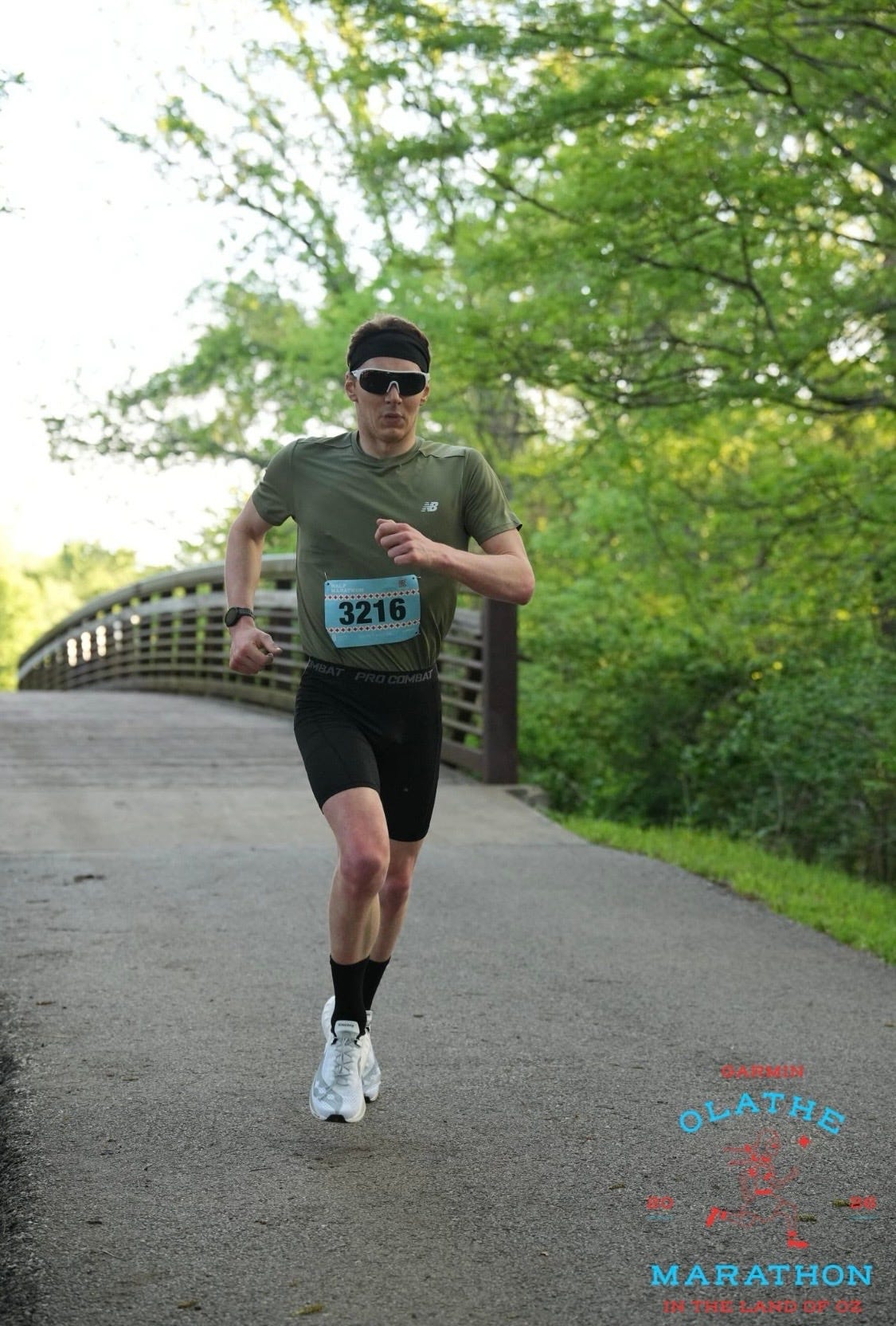
I recently raced a half marathon and came away with my first PR at any distance in almost three years. A pretty special day.
If you looked at my training, though, you would not call it perfect. So I do not mean to include an example as a means of telling you I have it all figured out.
But there is a story in my workouts leading in. One that reinforces how the body of work matters far more than the final session before race day.
Over the 10 weeks leading into the race (1:15 on the day, about 3:32 per km), here is what that looked like:
20K progressive run building from easy into goal half marathon effort. Closed with 3:33 and 3:32 for the final 2 kms. Controlled. Confident.
4 x 1K (200 jog) on the track. A dud. Scrapped at four reps, struggling to hit 3:36s. Just did not have it. Session readiness was not there.
5 x 1K (200 jog) the next week. Same setup, completely different outcome. 3:31s across, much more controlled. That is how it goes.
5 x 1200 (200 jog) sitting in the 4:11 to 4:14 range. More evidence that 3:30 to 3:33 per km was well within reach.
Local 5K race with the goal of controlled execution, essentially the first half of a 10K effort. 16:57, felt smooth, and more importantly, felt like there was another gear if needed.
4 x 2K (300 jog) about 10 days later, averaging about 7:00 per rep. Flat course, good rhythm. In hindsight, probably a touch aggressive, but I am not losing sleep over it.
And then came the one that should have felt easy:
1 x 5K at race effort, one week out.
17:36.
On paper, fine. In my head, not what I expected.
It felt harder than it should have. I went in expecting smooth, controlled, almost automatic, and instead got effort that felt a little too high, a little too forced.
This is exactly the trap.
If I had isolated that one session, I could have easily convinced myself something was off. That I was not ready. That I had missed. But I have been down that road enough times to know better.
Because when you zoom out, the answer is obvious:
The 20K progression
The 1K sessions, both the bad and the good
The 1200s
The 2Ks
The 5K race
That is the signal. So I showed up on race day trusting the entire body of work, not one imperfect session at the end of it. And overall, I know that I can be better in all areas of the training to go even faster if that is what I want to do.
Should you even interpret the final workout?
Short answer: not really. At least not the way most people do. The mistake is treating that last session like a test, not a touchpoint.
You’re not trying to prove fitness. You’re reminding your body what race rhythm feels like.
When athletes over-interpret this workout, they tend to do one of two things:
Chase a feeling that isn’t there → force the pace → dig unnecessary fatigue
Panic when it doesn’t feel perfect → carry doubt into race day
Neither helps.
A better framework:
Did you hit the general structure? Good.
Did you touch race pace (even if it felt a little off)? Good.
Did you finish without digging a hole? Perfect.
That’s it.
I’ll tell athletes this all the time: if you need your final workout to prove you’re ready, you’re already in trouble. The proof was in the last 6–8 weeks, not the last 7 days. The race, the training, the effort all matters to you. I know this. It is normal to care about the stakes of your athletic endeavors.
But save yourself some mental stress by understanding the expectation effect. You simply have to trust the work.
Any athlete is a byproduct or accumulation of the whole and not individual workouts. One must understand that no single workout predicts you race day goal time. It is more of a gauge that we should work on and not take every workout on absolute terms. Every workout has not to be judged or even emphasized like a nerd. Look at stats but don't over look, don't over emphasize, don't over analyze, don't over think was it too good or too bad for that day.
Everything has to be seen/viewed from a multi dimensional approach and not a uni dimensional approach. It takes time to come to a point where one can have this kind of aperture to look and acceptance has to be there. It is quite difficult when an athlete is deep in the training to perform at their best, sometimes blinders narrows the aperture of the viewpoint to interpret things in a wholesome manner.
As it is said-The whole is better than the sum of its parts.