
Know where you stand
Ideas for the competitive amateur

The season is young, but if you’re honest, those familiar urges are already creeping in.
You want to check. You want to poke the bear. You want to know where you stand.
In an ideal world, you’d jump into a race and let the result do the talking. But for most triathletes in the northern hemisphere, that’s not realistic this time of year. And even if you could race, a max effort may not be what you need right now.
So what do you do instead?
How do you gain confidence without blowing a hole in your training plan?
First and foremost, your daily training log should be telling a story you trust. But for some athletes, that isn’t enough. They want something to anchor to. That’s where benchmark sessions come in.
This week, we’ll look at a small set of key benchmark sessions in the swim, bike, and run that are demanding but controlled, repeatable, and informative. These are appropriate for athletes competitive in middle- to long-distance triathlon at the regional or national level, and they serve to confirm that your fitness is trending in the right direction.
Using Benchmark Sessions Correctly
Across all of the sessions that follow, there is a common theme: what can you still deliver after meaningful work?
Middle- and long-distance triathlon is rarely a “warm up and go” sport. You are asked to perform after accumulating fatigue. Sometimes subtle, sometimes profound. That means durability matters. More importantly, your expectations need to be built around your actual durability, not your best-case numbers.
If you ignore that context, the data is misleading. If you respect it, the data becomes extremely useful.
Swim
For most middle- to long-course triathletes, the goal of the swim is not to be fast, but cheap.
The ability to cover race distance with minimal energy cost is heavily influenced by speed reserve. When you have access to a wide range of paces, several things happen:
Changes in speed carry a smaller physiological tax
Your “easy” pace becomes both faster and more sustainable
You are able to maintain or even slightly increase velocity over the duration of the swim instead of slowly bleeding speed
This benchmark session looks at how well you can access that reserve after you’ve already done some work.
Structure
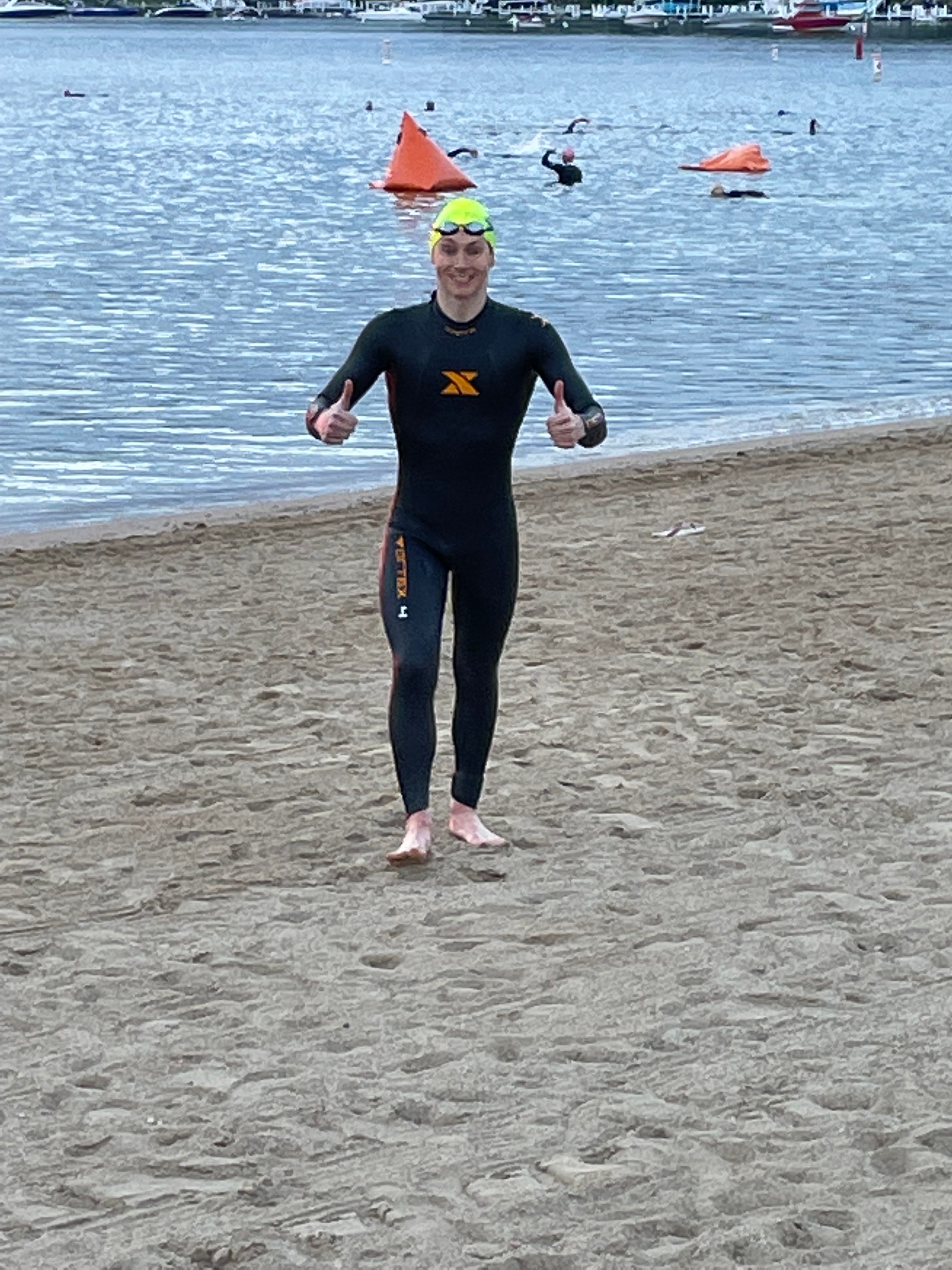
Attend your normal masters or squad swim (45–60 minutes)
After the session, break off and complete:
4 × 400 @ :15 rest
Execution
The first 400 should be controlled and comfortable
Each repeat should progress in effort and pace
The fourth 400 should be strong and purposeful, but not reckless
There should be a clear, measurable difference between the pace of the first and fourth 400.
How to interpret
If you are able to progressively bring the pace down, it suggests that:
Your aerobic foundation is solid
Your speed reserve is accessible
The prior workload did not overly penalize your mechanics or energy availability
If you cannot bring the pace down it’s an important signal. A hard group swim may be exacting too high of a cost, revealing limitations in:
Pacing discipline
Swim durability
Or expectations that don’t yet align with your current capacity
None of these are problems in isolation. But they are problems if left unexamined. Also, it does not indicate that going to swim squad is bad. Keep showing up and make your changes from above as necessary.
Bike
You will spend more time on the bike than any other discipline both in training and on race day. It is also the easiest place to accumulate aerobic fitness that supports the swim and the run.
But fitness alone is not the limiter.
As with the swim, the most important attribute on the bike is efficiency. The bike sets the conditions for the run. Arriving at T2 with intact legs and usable metabolic bandwidth is far more valuable than squeezing out a few extra watts early. The run is where you get the greatest return on investment for your energy and the bike determines whether that return is even available.
This benchmark session examines your ability to sustain intensity in two very different states:
Fresh, after only a warm-up
After duration has begun to accumulate
It can be completed indoors or outdoors and is easy to repeat over time.
Structure (2 hours total)
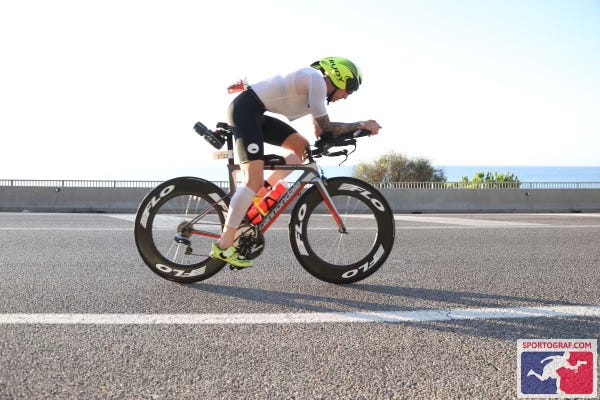
20–30 minutes easy, steady warm-up
3 × 6 minutes @ Zone 4 (power, HR, or effort)
2 minutes easy spinning between efforts
30 minutes steady upper Zone 2
Repeat the same 3 × 6 minutes @ Zone 4
Execution
During the first set of 6-minute efforts, take note of:
Perceived effort
Heart rate response
Power stability (if applicable)
During the second set, observe:
How effort compares to the first set
Whether heart rate drifts disproportionately
Whether power is sustainable or requires over-reaching to hold targets
How to Interpret
This session highlights the penalty imposed by sustained aerobic work.
Most athletes will complete the first set of intervals without issue. That’s not the point. The information comes from what happens after 30 minutes of steady riding.
Upper Zone 2 is intentionally chosen because, for most middle- and long-distance triathletes with realistic expectations, the majority of the race occurs here or slightly above when fitness is robust.
If that intensity is set too aggressively, it will show up clearly:
The second set of intervals feels disproportionately harder
Power drops or becomes erratic
Heart rate climbs for the same output
If you are already in trouble here it strongly suggests that holding a 4-, 5-, or 6-hour bike split at your current targets will come at a significant cost.
And if the bike extracts too high a price, the run almost always pays for it.
Run
While you want to use the run as the best place to focus your energy, it is does not mean there won’t be a need for pacing. Running faster in the back half of the run indicates good pacing but it is also a mental boost when you are passing other folks on course. This session forces you to be honest early in favor of opening the flood gates later on.
Structure (90 minutes total)
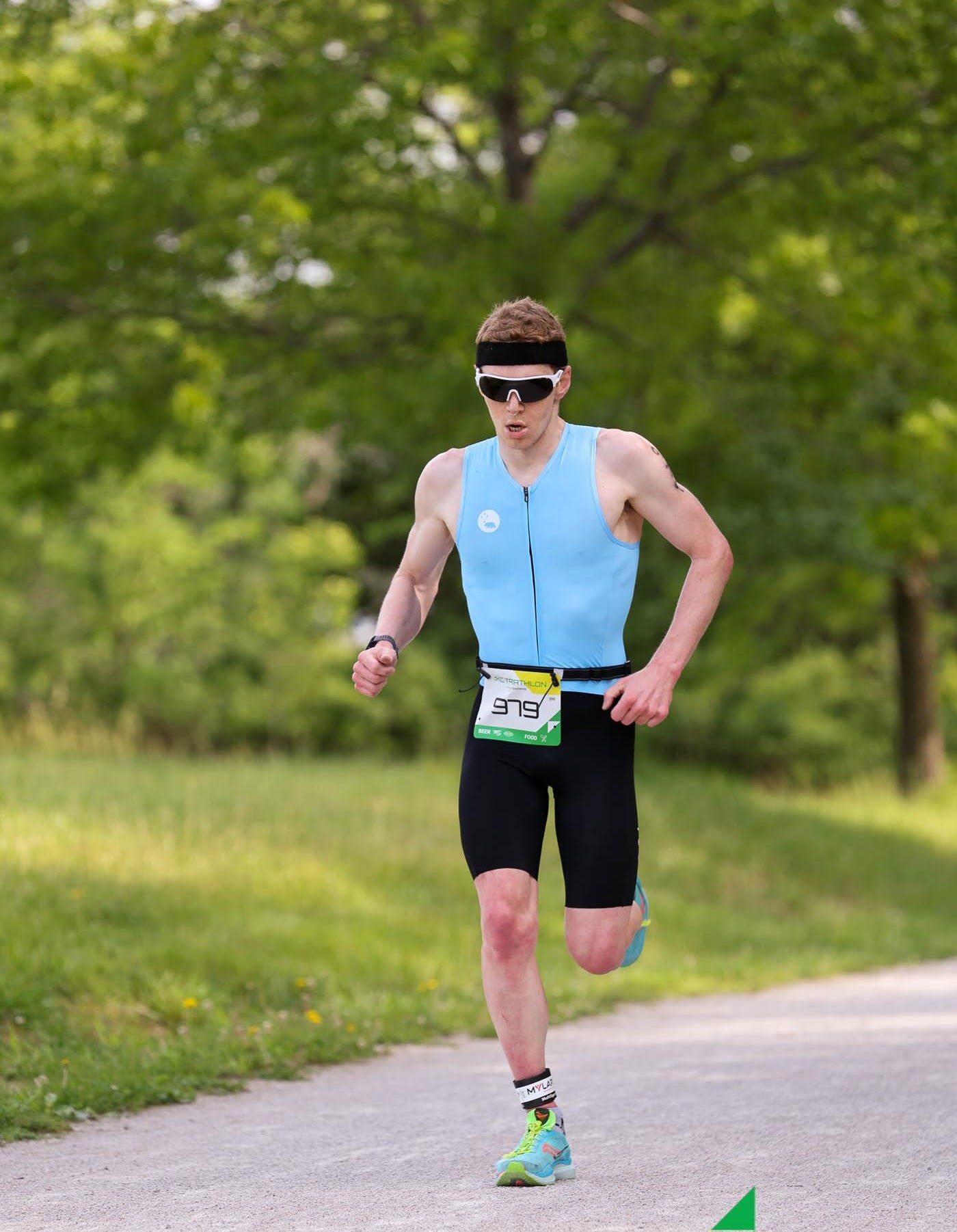
45 minutes easy
45 minutes build, topping out around open half marathon pace/effort
Execution
For athletes in good-to-excellent fitness, open half-marathon pace represents a threshold-type effort. It is sustainable, but it is not comfortable.
The key here is how you arrive at that effort.
Working down toward threshold after 60–75 minutes of accumulated running requires:
Aerobic durability
Mechanical consistency
The discipline to resist turning the early portion into “free speed”
You may choose to segment the run by distance if that aids pacing (e.g., 5 miles easy + 5 miles build, or kilometer blocks). The structure matters less than the progression.
You can precede this run with a short, easy bike to assess how it feels to run slightly pre-fatigued, but that is optional and not the primary intent of the session.
How to interpret
This session tells you how much pace you can access late without borrowing from tomorrow.
Positive signs:
The final 10–15 minutes feel demanding but controlled
Form remains intact as pace increases
You are able to settle into half-marathon effort rather than spike into it
Red flags:
The build stalls well below target effort
Pace increases only by significantly elevating perceived exertion
You feel compelled to “force” the final segment
If the session falls apart late, the lesson is that your early pacing or current durability does not yet support late-race execution.
Where are the brick workouts?
If you’re looking for brick workouts, they’re not here yet.
The purpose of the benchmark sessions above is to first understand how each discipline behaves on its own once some work is already in the legs. Once you’ve gathered this benchmarking data, you can start to connect the dots and build bricks that are purposeful rather than performative.
Here are a few examples of how that progression might look:
Swim hard + ride easy
Observe the penalty of a demanding swim on bike efficiency and comfortRide hard + run easy
Assess how bike intensity influences run mechanics and perceived effortRide hard + run hard
Use this to generate realistic expectations, not best-case scenarios
This is how you transition from a general base phase into a more event-specific approach, layering stress intentionally, with context, rather than all at once.
Details on how to structure and progress these brick sessions will follow in a future article.
Middle- and long-course racing rewards athletes who arrive prepared. At the very least, you’ll have more fun that way. These sessions offer a way to measure readiness without compromising the work that actually matters when race day arrives. When done with the right intention, they build fitness and provide a meaningful check on progress.
How’s that for value?