
To the pool
Level up your swim confidence.

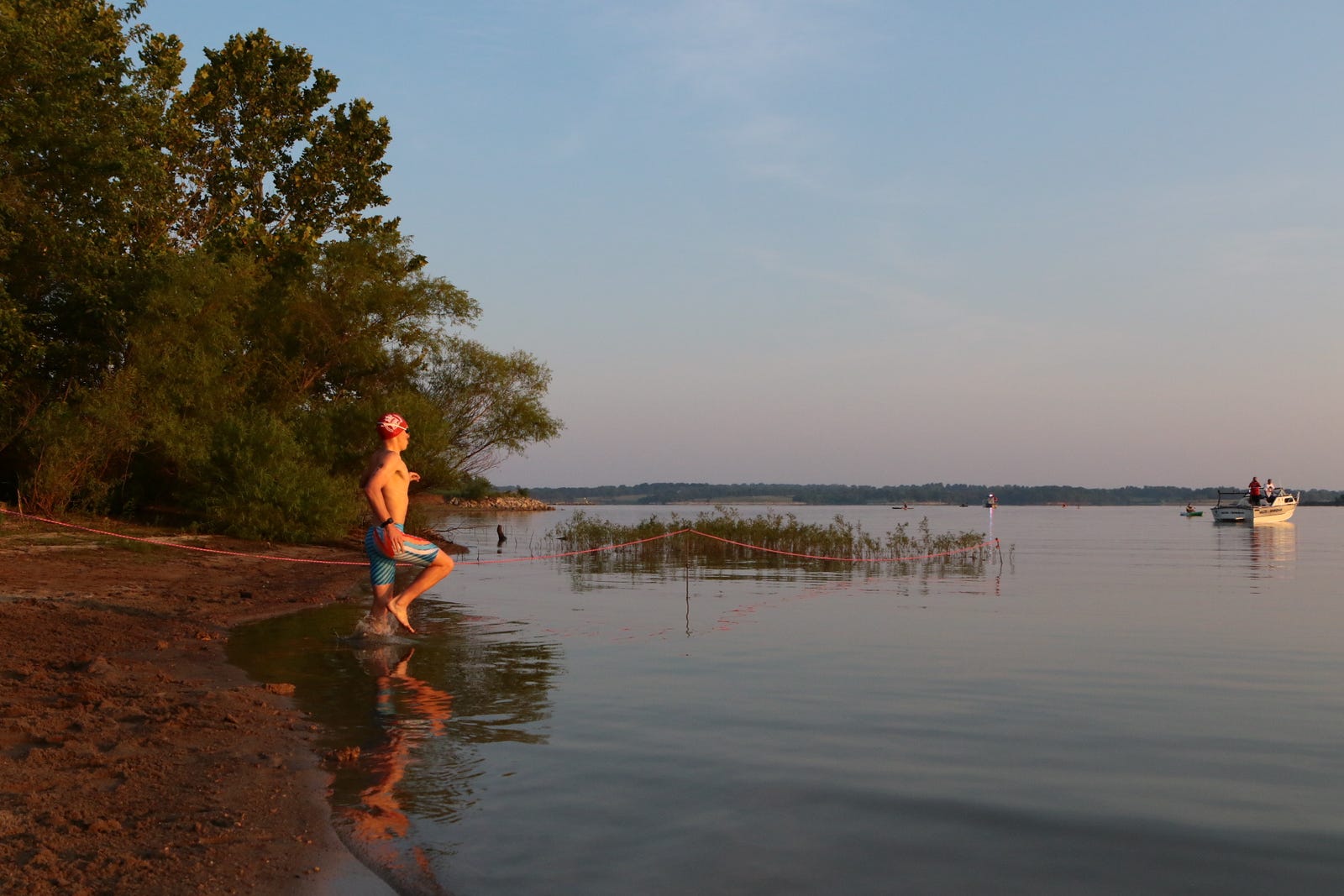
As the winter months phase out, triathlon racing season begins to take shape. If you are the typical age group athlete, you may feel inclined to ramp up the swim volume with races approaching. Instead of chugging up and down the lane, there are some important points that can ramp your confidence in line with ramping up your volume.
Swim often
Getting to the pool is a struggle. We can ride and run from our doorstep, but swimming usually involves a time and travel commitment. This sometimes can make it difficult to swim often, but the effects of consistent swimming are well worth the time.
Swimming is unique in that tactile awareness in the water increases with more frequent swimming. Ask any elite-level swimmer and they will talk your ear off about how they have a great or poor feel for the water on any given day. Learning how to leverage water to your advantage and develop “feel” is only possible when swimming regularly.
If you currently make it to the pool two days per week, consider working in a third or fourth swim. These swims do not have to be crushing sprint sessions. They are intended to be additive and should prioritize technique.
Another way to play it is to bring your run gear to the pool and knock out an easy run after the swim. 45 minutes of swimming and then 45 minutes of running is a great 90-minute session. Stacking sessions in this way can make the shift in swim frequency fit a busy schedule.
Develop gears
A common limiter for the inexperienced swimmer is having one speed. If you are treating your race as an individual time trial, one steady speed may be fine, but there is tremendous value to having different gears. The wider the aerobic range in the water, the better your bike and run will fair.
You will also benefit from having better swim sessions if you train your ability to pace a particular set, leading to an improved training effect. Speaking of sets, here is one of my favorites for working your aerobic gears:
400 :20s rest (grab your time at the 300)
300 :20 rest (grab your time at the 200 + make overall 300 faster than 300 of the 400)
200 :20 rest (grab your time at the 100 + make overall 200 faster than 200 of the 300)
100 (make this 100 faster than the 100 of the 200…but do not max it out!)
This set is called beat-the-split and for good reason. You will be hosed if you start too fast and cannot progress through.
This set can be done for multiple rounds, starting with a 500, or going 800/600/400/200 for variety. It can also be valuable to do a round pull and a round swim. This is great practice for your gears and you’ll log a good deal of volume in a short amount of time.
Wean off the toys
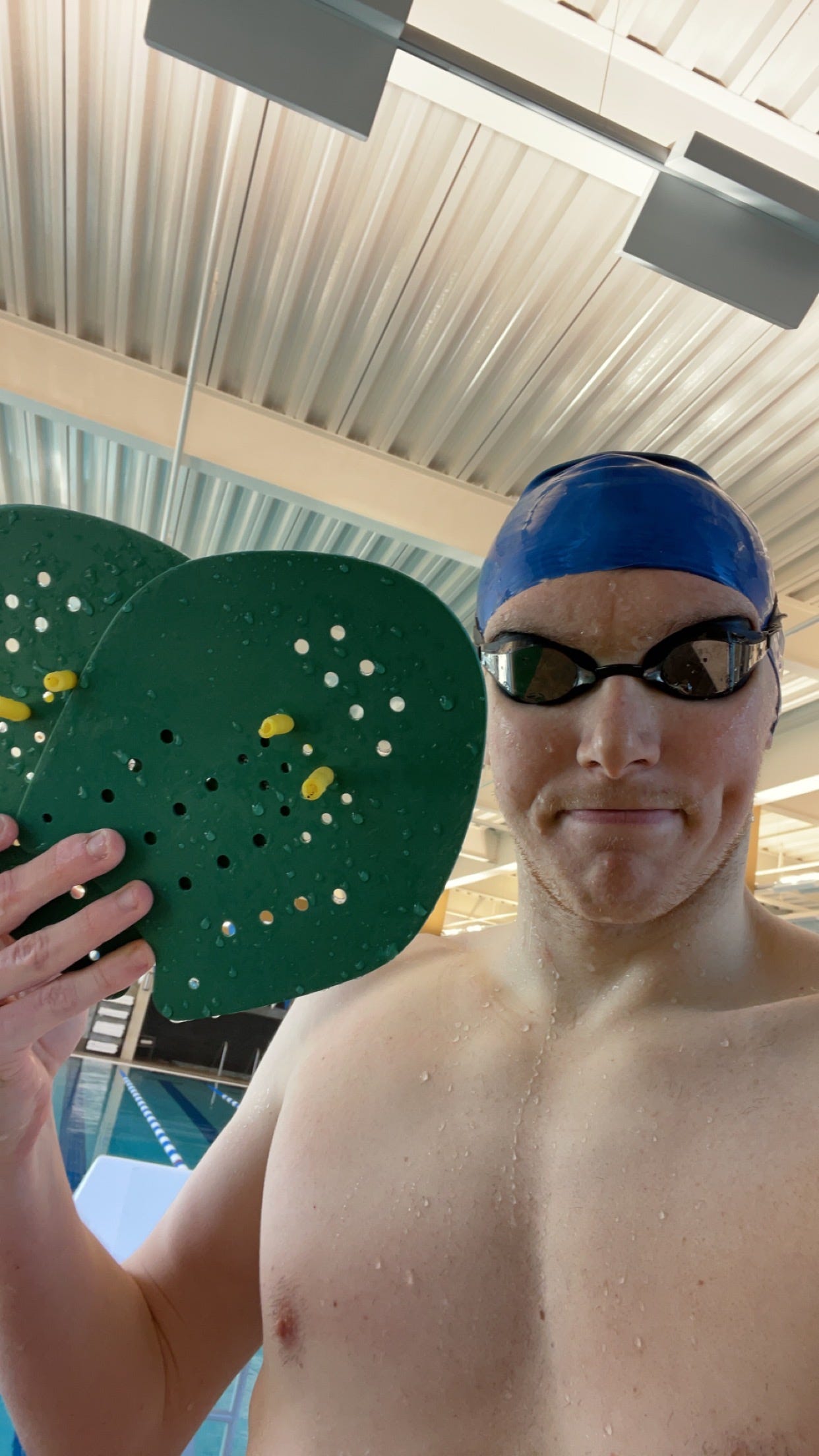
Somewhere along the way, the idea of using equipment became synonymous with improving technique. While this may be true, it is common to use toys too often as a crutch.
The best use of equipment such as paddles and a pull buoy is to experience the contrast between assisted and unassisted swimming, and then eventually close the gap between the two.
The toys should place you in a favorable body position where you can experience the feeling of efficiency, of being on top of the water, of having a complete pull.
These sensations are best applied to long swims without equipment. This is where you can really test whether you are becoming more efficient and whether your use of toys is working to your benefit or just patching holes. Sink your teeth into the challenge of developing a body position that rides high on the water.
Closing remarks
Going to the pool is a commitment, and it is in your best interest to make every swim count. Improving with regard to the effort required to swim 1500, 2000, or 4000 meters continuously is the name of the game.
Take the time this spring to focus on getting to the pool frequently, learning your gears, and giving the toys a break. Your bike and run will thank you later.
Ok but how
Improving for an olympic? Does the technique (drills) if done without a coach work on its own or is there always a need for a coach?
Thank you, Max!